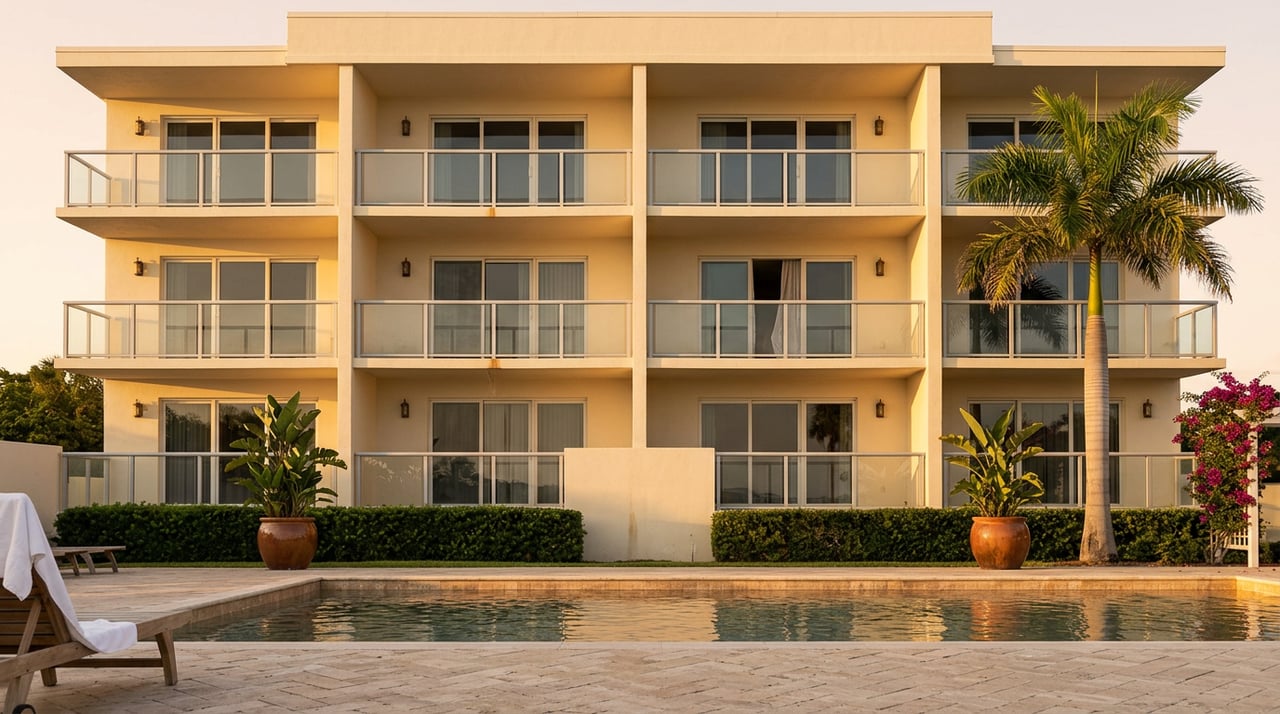
Two Highland Beach condos, same block, same ocean view, same asking price. One closes in six weeks with a conventional loan at a normal rate. The other gets kicked to a non-warrantable lender, a bigger down payment, and a rate that makes the buyer walk. The difference has nothing to do with square footage, floor level, or even how old the building is. It comes down to one line in the association's budget: whether the board funds reserves at the level a study recommends, or whether it uses a method that lets the reserve balance drift toward zero.
That second method has a name. It's called baseline funding, and as of August 3, 2026, Fannie Mae no longer accepts it on any conventional loan application. If you're touring condos in Highland Beach this month, that date matters more than the year the building was built.
The rule that changed one day before you read this
Florida law never outlawed baseline funding. A board could adopt a reserve study, see that a full-funding schedule would push dues up hundreds of dollars a month, and instead choose a plan that keeps the account hovering near zero without technically running a deficit. It was legal. It kept fees looking reasonable on a listing sheet. Boards liked it because owners liked lower dues.
Fannie Mae's Lender Letter LL-2026-03, issued in March 2026, ended that option for loans it will purchase. Starting with applications dated August 3, 2026, lenders can no longer treat a baseline-funded association as adequately reserved, and the streamlined Limited Review process that used to let high-equity buyers skip deep scrutiny of a building's finances is retired for good. Every conventional loan on an established condo with more than ten units now goes through Full Review: budget, reserve study, insurance, delinquency rate, litigation history, all of it. A separate change raising the minimum reserve allocation from 10% to 15% of budgeted assessment income doesn't land until January 4, 2027, so that piece is still ahead. The baseline funding ban is already live.
The practical effect: a building that was financeable in July can become non-warrantable in August without a single wall cracking or a single dollar of new damage. The trigger isn't the roof. It's the budget line.
Why this collides directly with Highland Beach's building stock
Highland Beach's oceanfront and Intracoastal inventory is overwhelmingly a product of two building waves, and almost none of it was built after the reserve-funding rules existed. A Canadian developer's Villa Nova and Villa Magna anchored the town's first wave of exclusive towers. 45 Ocean, originally sold as Ambassador South, went up in the mid-1970s as two ten-story beachfront buildings totaling 160 units. Regency Highland followed with a 14-story tower and a six-story building holding 220 residences combined. Boca Highlands Beach Club and Marina, built in the early 1980s, was the first Highland Beach community with a private beach club, a distinction it still shares with only two others in town. Coronado came out of that same 1980s wave as a full-service, full-amenity building.
Every one of those buildings is well past the coastal milestone-inspection trigger of 25 years, which means a milestone inspection and a Structural Integrity Reserve Study are not optional line items. They're already required, and the SIRS deadline for existing associations was December 31, 2025. What's not settled by law is which funding method the board chose to hit that requirement, and that's exactly the detail Fannie Mae now checks that it used to wave through.
Toscana, built after the turn of the century as three towers with 426 units and its own private beach club, sits on the other side of that divide. Newer construction doesn't exempt a building from SIRS, since the requirement is triggered by height, not age, but a tower with a shorter maintenance history and a cleaner initial reserve study has an easier time clearing Full Review than a fifty-year-old high-rise catching up on decades of deferred contributions.
That's the split a buyer needs to understand before writing an offer here: not luxury versus modest, not oceanfront versus Intracoastal, but pre-reform funding habits versus buildings that never had the chance to develop them.
What baseline funding actually did to your neighbor's dues, and yours
Here's the mechanism worth sitting with. A board choosing baseline funding wasn't hiding anything. Florida's own Division of Condominiums confirms associations with budgets adopted before December 31, 2024, could vote to waive or reduce SIRS reserves with a majority vote. Baseline funding was simply the more conservative cousin of a full waiver: keep the account above zero, but don't fund it to the level an engineer's report actually recommends.
The dues stayed lower for years. Then two things happened close together. First, Florida barred waiving or reducing reserves for SIRS-covered components in budgets adopted on or after December 31, 2024, which forced boards toward full funding regardless of what a vote wanted. Second, Fannie Mae removed baseline funding as an acceptable method for underwriting, independent of what state law technically permits. A board that spent a decade keeping dues low by underfunding reserves now has two regulators pointing at the same problem from different directions, and the bill lands on whoever owns the unit when the catch-up assessment gets voted.
The document that decides whether your loan closes
Ask for the reserve study before you ask about the kitchen. Two numbers on that study matter more than anything else in the disclosure package: how recently it was completed, and which funding level it recommends versus which one the board actually adopted. A study older than three years won't satisfy a Full Review lender under the new guidelines. A study that recommends full funding but shows a board still budgeting at the baseline level is the exact scenario Fannie Mae built LL-2026-03 to catch.
Pair that with the building's milestone inspection status. If a Phase 1 report already flagged deterioration, a Phase 2 destructive inspection may be pending, and Florida law gives the association 365 days from that report to begin repairs. Neither the reserve study nor the milestone report tells you the full story alone. Read them together.
Who pays if an assessment lands mid-contract
This is the detail that surprises buyers who've done everything else right. Under most Florida condo purchase contracts, a special assessment levied before the contract's effective date is the seller's obligation, while one levied after typically shifts to the buyer. A board vote scheduled two weeks after your closing date isn't a hypothetical risk. It's a line item you should be asking the listing side to disclose before you're locked into a number.
What to request before you write an offer
- The current Structural Integrity Reserve Study, including its completion date and the funding level the study recommends
- The board's adopted budget, specifically the reserve line, so you can compare adopted funding to recommended funding
- The most recent milestone inspection report and any Phase 2 findings
- The last 12 to 24 months of board meeting minutes, watching for assessment votes or financing discussions
- Written confirmation from your lender on whether the building currently qualifies for Full Review or Waiver of Project Review, given the August 3, 2026 changes
- The master insurance certificate and any non-renewal notices
A few questions worth asking directly
Does any of this apply to Highland Beach's single-family homes? No. The milestone inspection and SIRS requirements apply to condominium and cooperative buildings three stories or taller. Highland Beach's oceanfront estates and Intracoastal single-family lots fall outside Chapter 718 entirely.
What if the building already funds reserves at the recommended level? Then the August 3 change costs you nothing. This is precisely why a current, fully funded reserve study is now a selling point rather than a compliance chore, and why buildings that got ahead of the curve will likely see steadier resale activity than ones still catching up.
What if I'm paying cash? Financing rules don't apply to your closing, but they still apply to the next buyer of your unit. A non-warrantable building shrinks your resale pool to cash buyers and portfolio-loan borrowers, which tends to show up in price and days on market whenever you decide to sell.
Highland Beach's inventory rewards buyers who read the reserve study as carefully as the floor plan. If you're comparing towers along A1A right now and want a second set of eyes on what a building's funding history means for your financing, Jason Litt works these transactions daily across Highland Beach and the surrounding coast. Get a free home valuation or reach out directly before you write an offer, not after.